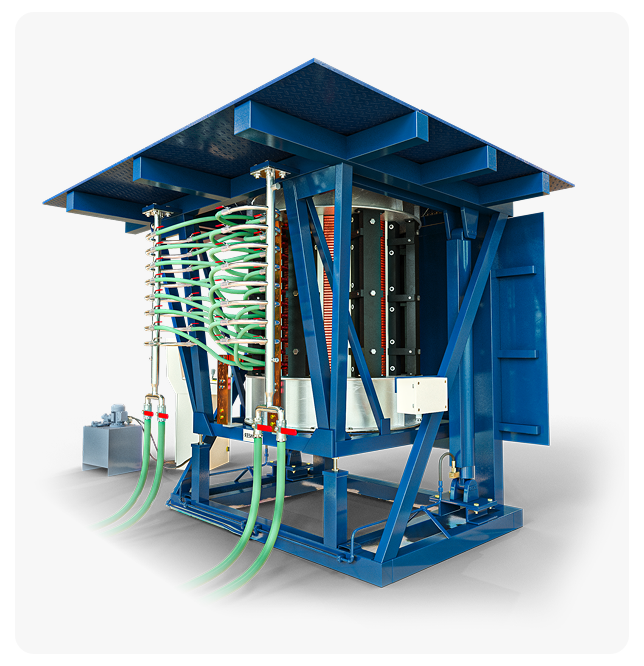
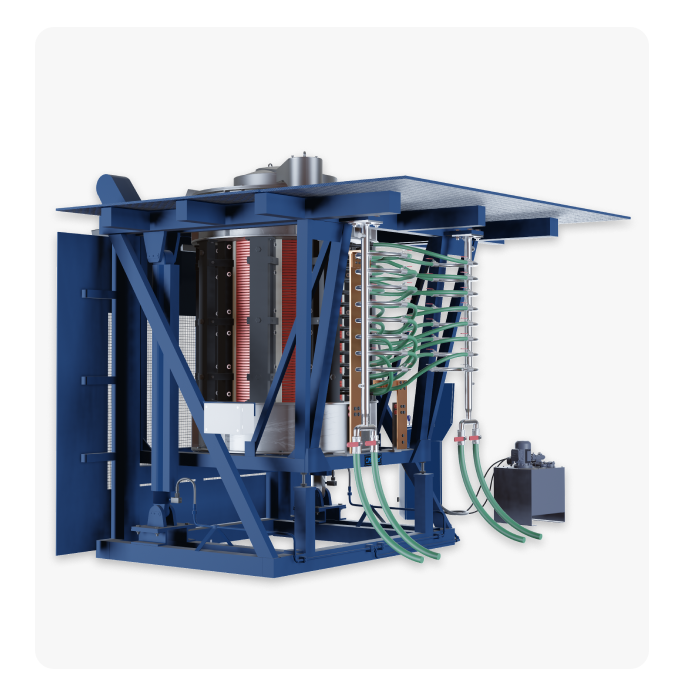
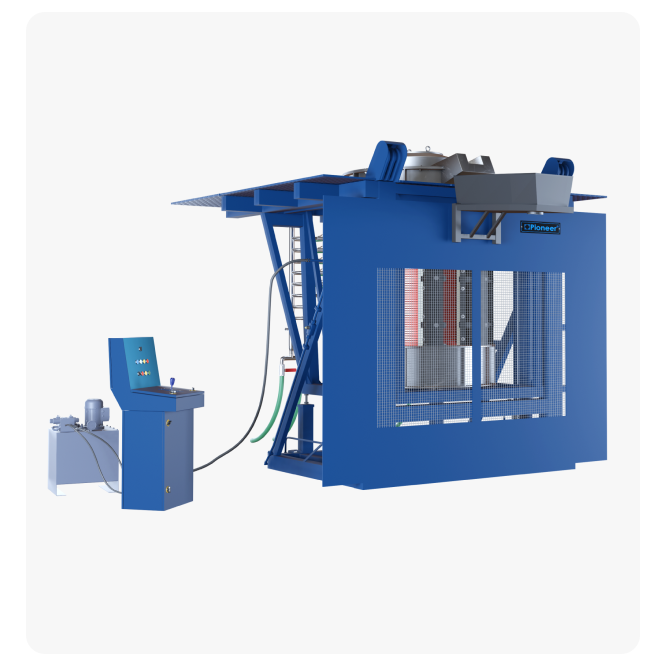
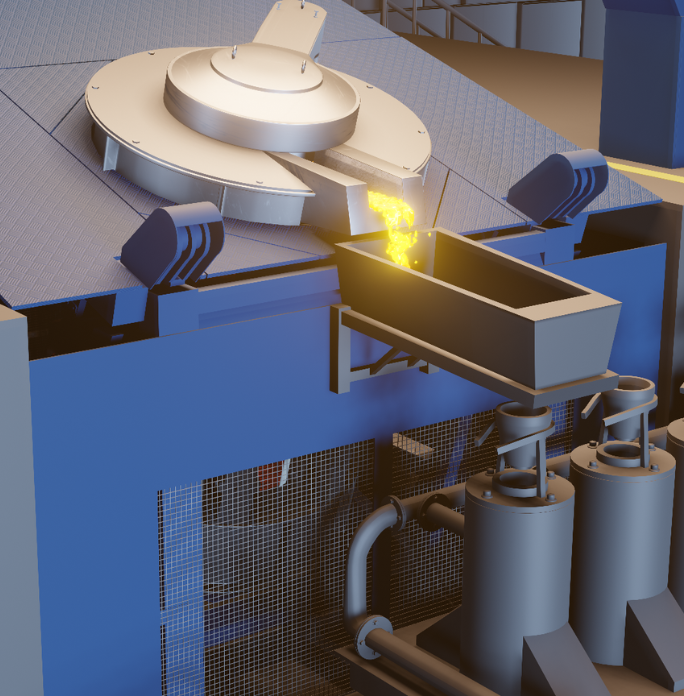
Coreless Induction Melting & Holding Systems for non-ferrous metals and alloys

Flexible Melting for Alloy Control and Batch Operations

Coreless induction furnaces provide unmatched flexibility for alloy changes, batch melting, and precise temperature control. Pioneer designs mains and low-frequency coreless systems tailored for non-ferrous foundries and industrial melting operations requiring metallurgical control and operational versatility.

Why Coreless Technology?

Coreless furnaces are particularly suitable for:

Key Engineering Features:
  • Frequent alloy changes
  • Batch melting operations
  • Rapid temperature adjustments
  • Precise superheat control
  • Smaller to mid-size melt capacities

They are widely used in aluminium, copper, brass, bronze, and specialty alloy applications.

Pioneer Coreless Furnace Engineering Coil & Refractory System Design

Pioneer’s coil design ensures:

  • Uniform electromagnetic field distribution
  • Optimized stirring effect
  • Reduced coil stress
  • Enhanced lining life

Refractory selection is application-specific, considering alloy chemistry and temperature cycles.

PRICIZONE – Precision Thermal Zoning

In systems requiring refined temperature control, Pioneer integrates PRICIZONE principles to ensure:

  • Accurate temperature profiling
  • Reduced thermal gradients
  • Consistent superheat levels
  • Better downstream casting quality

DirectMOD™ Power Architecture

Through DirectMOD™, coreless systems benefit from:

  • Smooth power modulation
  • Reduced harmonic distortion
  • Improved electrical efficiency
  • Stable operation across varying loads

This is especially critical during alloy transitions and holding phases.

Process Advantages

  • Strong electromagnetic stirring for homogeneity
  • Faster melting cycles
  • Compact footprint
  • Scalability
  • Compatibility with automation systems

Applications

Non-ferrous foundries

Alloy development facilities

Billet casting operations

Secondary metal recycling

Specialty alloy melting

Engineered for Reliability

Pioneer’s coreless furnaces are built with:

  • Structural rigidity for high thermal cycles
  • Advanced cooling systems
  • Operator-friendly control panels
  • Integrated safety interlocks

Selecting Coreless vs Channel

Coreless systems are preferred where:

  • Alloy flexibility is required
  • Melt size is moderate
  • Process requires frequent changes
  • Stirring is beneficial

For continuous, large-scale holding, channel technology may be more suitable.

Capacity Range

Tilting furnace with open spout

  • Power Rating: 100KW to 10000KW
  • Frequency: 50Hz to 250Hz
  • Holding Capacity: 300Kg to 40000Kg

Talk to Our Melting Experts

Whether for a green-field plant for melting non-ferrous metals and their alloys, or capacity expansion, or modernization project,
Pioneer’s engineers are ready to support your metallurgical and other technical requirements.

CONTACT US Download Brochure

FAQ's

A coreless induction furnace works on the principle of Faraday’s law of electromagnetic induction. The furnace uses an alternating magnetic field to heat and melt the metallic charge without direct contact. Instead of using an iron core, the furnace uses a coil to generate a magnetic field that induces eddy currents in the metal. The resistance to these currents causes Joule heating. The interaction between eddy currents and the magnetic field generates a Lorentz force, resulting in automatic stirring of the molten metal.

In Pioneer Furnaces’ designs, the stirring ratio is determined by the specific non-ferrous metal being melted. Our coreless induction solutions are customized to minimize burning loss and reduce power consumption—critical requirements for the non-ferrous industry.

Yes. Pioneer’s coreless furnace can be fully emptied, making it ideal for operations requiring frequent alloy changes. It allows seamless transitions without compromising chemical composition or metallurgical quality.

By customizing the optimum stirring ratio for specific non-ferrous metals, charge type, and productivity needs, Pioneer enhances lining durability. We optimize electromagnetic stirring, heat distribution, refractory selection, and melting practices to minimize erosion, thermal shock, and hot spots—significantly extending lining life.

Absolutely. With proper power modulation and refractory design, a coreless furnace can be used for short- to medium-term holding while maintaining temperature and chemical composition.

Precision. Performance. Pioneer.